

Redistricting Madness
Gerrymandering rigs elections by redrawing district lines, but higher turnout can still break the maps politicians draw to cheat.

By Jeremi Suri
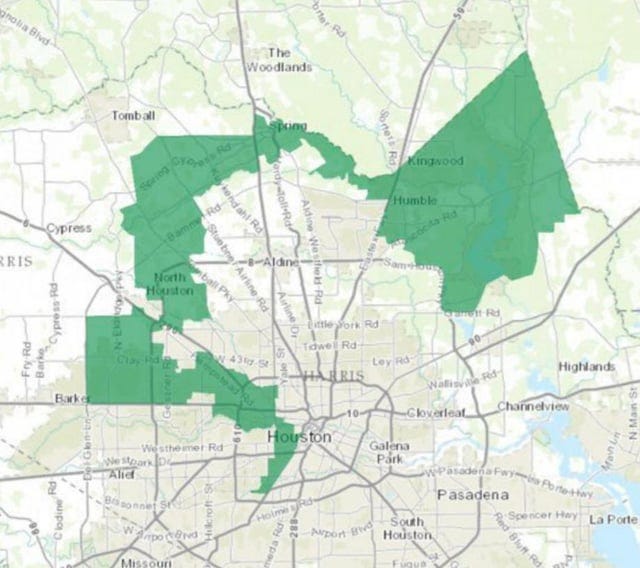
Redrawing voting district lines to shape election outcomes is a form of cheating. It is like allowing students to choose the questions on the test. If politicians choose their voters rather than vice versa, they can ensure the results they want. Republicans collect enough Republicans from far and wide to vote for them; Democrats do the same. Everyone is sorted beforehand.
Real choice in elections is narrowed, and districts are drawn to connect voters who have no connection other than a particular party. Cities like Memphis are divided up to make sure the majority in the city does not get the representative it wants. Distant rural communities are put together to elect a figure whom most of them do not know.
This is not democracy, but its intentional distortion by politicians who want to get unpopular outcomes ratified at the ballot box. It seeks to cynically prefigure elections, making them a ratification for lies, not a deliberation among different points of view.
This is an old story, dating back to the eighteenth century, but it has become much worse because of technology and extreme partisanship. Digital mapping has allowed those drawing districts to cut them up house by house, finding votes for one side and connecting them in spider webs to form the most unlikely voting blocs.
Extreme partisanship — the belief that the other side must be defeated at all costs — encourages redistricting whenever possible, as we are seeing now. In Tennessee, it took the state legislature only a few hours after an enabling Supreme Court decision. The clear goal is to draw new districts to win without any attention to representation, fairness, or even basic decency. Win at all costs justifies cheating, and it sacrifices democracy.
So what can we do? Every gerrymandered district assumes that past voters will vote as they did and past non-voters will remain non-voters. We must change that. In the four new gerrymandered districts in Texas, for example, a shift in a small percentage of voters will actually reverse the outcome against the expectations of Republicans. A few voters need to shift their votes, and a small number of previous non-voters need to come out to the polls. As partisans cut up cities and create narrow margins in their favor to maximize districts, they are vulnerable to modest voter changes.
Democracy will be saved by voters coming out and making their voices heard. That includes citizens who find their district lines changed overnight for the purpose of diluting their votes. They must turn out in higher numbers and bring out others fed up with politicians trying to deny them representation.
A groundswell of citizens demanding attention can turn gerrymandering against the cheaters. We must mobilize people to vote against those who changed the boundaries for themselves, and tried to silence their constituents. Citizens must vote for those who really want to represent them. And never vote for cheaters.
It can happen. A majority of Americans can still hold the corrupt partisans accountable. That should be our rally call. Vote for real representatives.
Also see in:
German, Turkish, Chinese, Spanish

Jeremi Suri holds the Mack Brown Distinguished Chair for Leadership in Global Affairs at the University of Texas at Austin. He is a professor in the University’s Department of History and the LBJ School of Public Affairs. Professor Suri is the author and editor of eleven books on politics and foreign policy, most recently: Civil War By Other Means: America’s Long and Unfinished Fight for Democracy. His other books include: The Impossible Presidency: The Rise and Fall of America’s Highest Office; Liberty’s Surest Guardian: American Nation-Building from the Founders to Obama; Henry Kissinger and the American Century; and Power and Protest: Global Revolution and the Rise of Détente. His writings appear in the New York Times, Washington Post, Wall Street Journal, CNN.com, Atlantic, Newsweek, Time, Wired, Foreign Affairs, Foreign Policy, and other media. Professor Suri is a popular public lecturer and comments frequently on radio and television news. His writing and teaching have received numerous prizes, including the President’s Associates Teaching Excellence Award from the University of Texas and the Pro Bene Meritis Award for Contributions to the Liberal Arts. Professor Suri hosts a weekly podcast, “This is Democracy.”