

Protests Protect Democracy
Peaceful protest is the heartbeat of American democracy—proof that our nation’s strength lies not in silence, but in citizens who speak, march, and demand justice with courage and conviction.

By Jeremi Suri
To sin by silence, when we should protest, makes cowards out of men.
- Ella Wheeler Wilcox
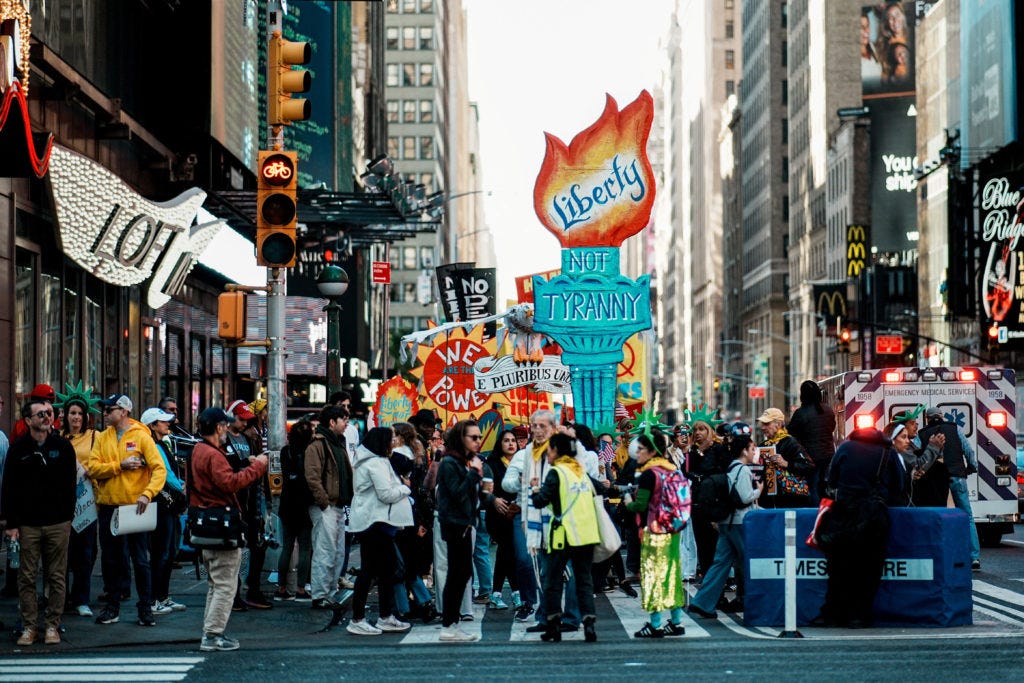
Democracy is troubled, but still alive in our country. The nationwide protests this weekend proved that. Millions of people from nearly every age, background, and profession joined angry, hopeful gatherings in more than two thousand towns. The protests were festive, filled with colorful costumes and sarcastic signs. The protests were serious, giving voice to sobering criticisms of the current president’s attacks on the rule of law, basic rights, and human decency.
The protests were also patriotic, flagrant in their display of American flags and their reading of the Declaration of Independence. The people on the streets were speaking up for the enduring qualities of American democracy, especially rule by the people and limits on concentrated power. The protesters were frequently eloquent and everywhere peaceful – showing the best of civilized discourse. We found this weekend what Abraham Lincoln called the “better angels of our nature.”
The truest, most idealistic moments in American history often come in these conditions. Power does not encourage justice. Wealth does not motivate sharing. “Struggle,” Frederick Douglass famously explained, is essential for the defense of freedom. The great abolitionist was accurate when he thundered: “Power concedes nothing without a demand.”
Peaceful protests are public demands. The crowds humanize debate from a competition of positions to a plea for change. The ordinariness of the people protesting evokes sympathy, it gives weight to their words, and it draws attention to the cruelty of those who deny their claims. The number of people protesting shows that the issue is not partisan to a specific group, but something that affects many, if not most, Americans. And protests draw attention from leaders, other people, and especially the media. “The whole world is watching” when millions of Americans take to the streets in thousands of towns. It is very hard to avoid addressing their demands, in some way.
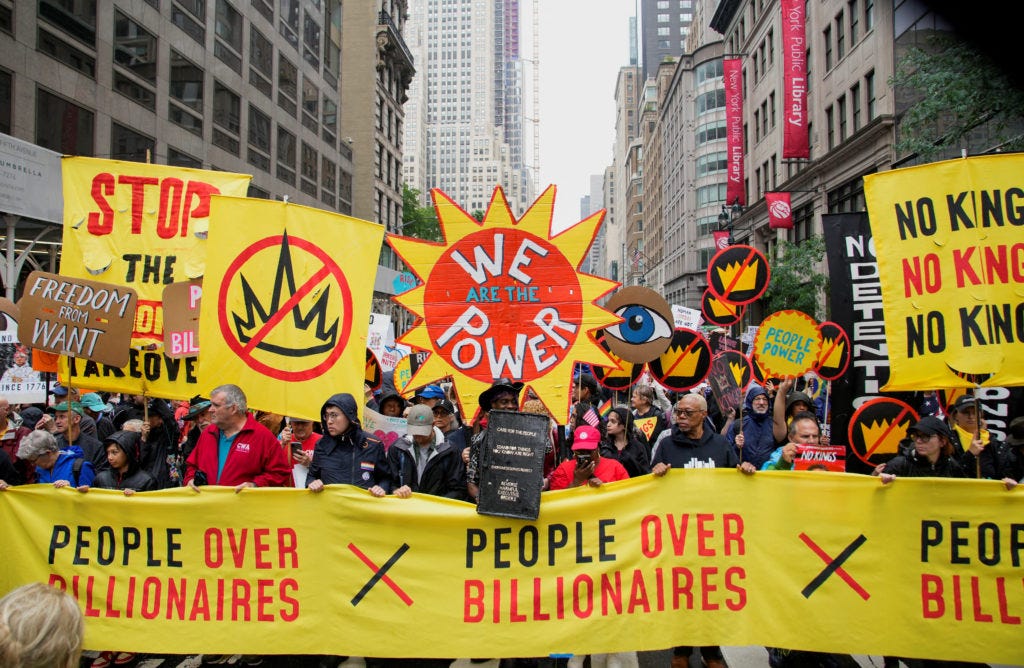
My own historical research provides historical evidence for this analysis. Peaceful protests in the second half of the twentieth century changed the public debate about civil rights, nuclear weapons, the Vietnam War, and, yes, presidential power. For each of these issues, public opinion was shaped by protests. Voters did not always agree with the demands of protesters, but they often turned away from leaders who ignored or vilified the people marching in the streets. Protests change the public agenda, and they force leaders to respond.
Elections often turn on who can promise to satisfy some of the protesters’ demands. That is why John F. Kennedy elevated civil rights when running for office in 1960, and why Richard Nixon pledged to withdraw from Vietnam during the 1968 presidential campaign. Both were very close elections; neither candidate would have taken the same positions without the protests. For Democrats and Republicans, protests move American politics. The process is slow and messy, but it matters enormously.
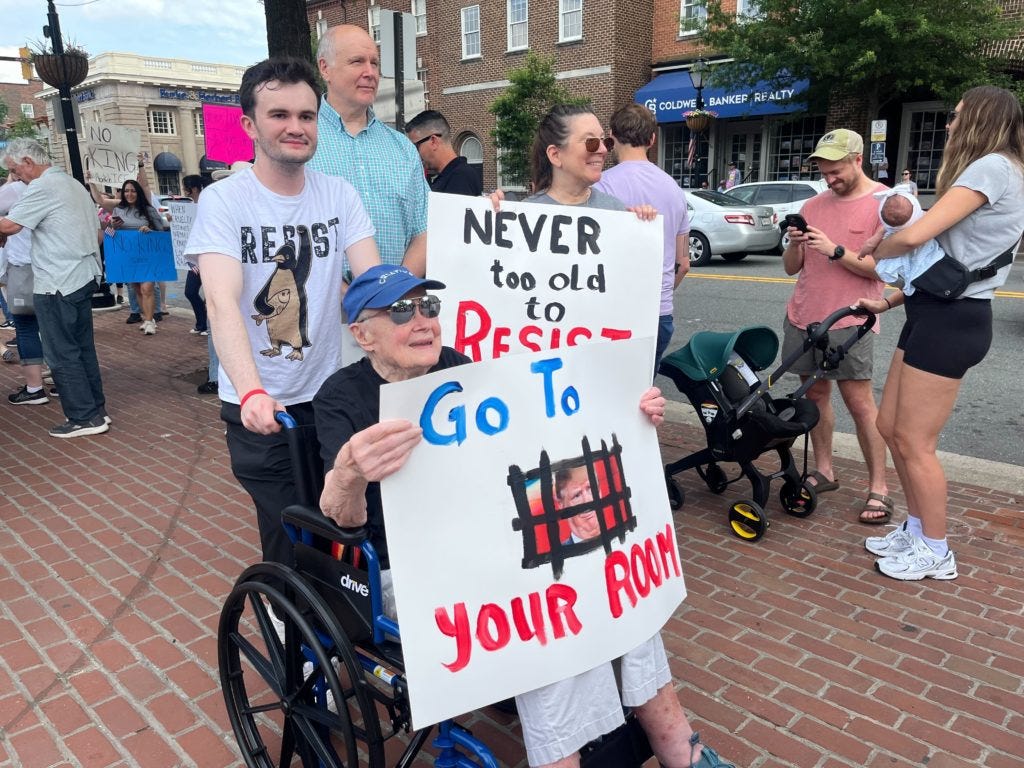
What should protesters do to increase their influence? History offers some useful lessons. First, keep at it. Peaceful protest is a process, not just an event. People must continue to motivate one another to make clear, compelling, and peaceful arguments for change every day. The public must see why current policies are harmful and understand why change is necessary. This involves the core use of free speech – to speak up! The power of protest speech is why so many leaders, past and present, try to repress it.
The protests in the streets must motivate more speech, not less. Protests win through long-term persuasion. Speaking plainly and truthfully is the highest form of courage, the early twentieth-century poet, Ella Wheeler Wilcox, reminded us. Holocaust survivor Elie Wiesel was more direct: “I swore never to be silent whenever and wherever human beings endure suffering and humiliation. We must always take sides. Neutrality helps the oppressor, never the victim. Silence encourages the tormentor, never the tormented.” Protests encourage us to speak up.
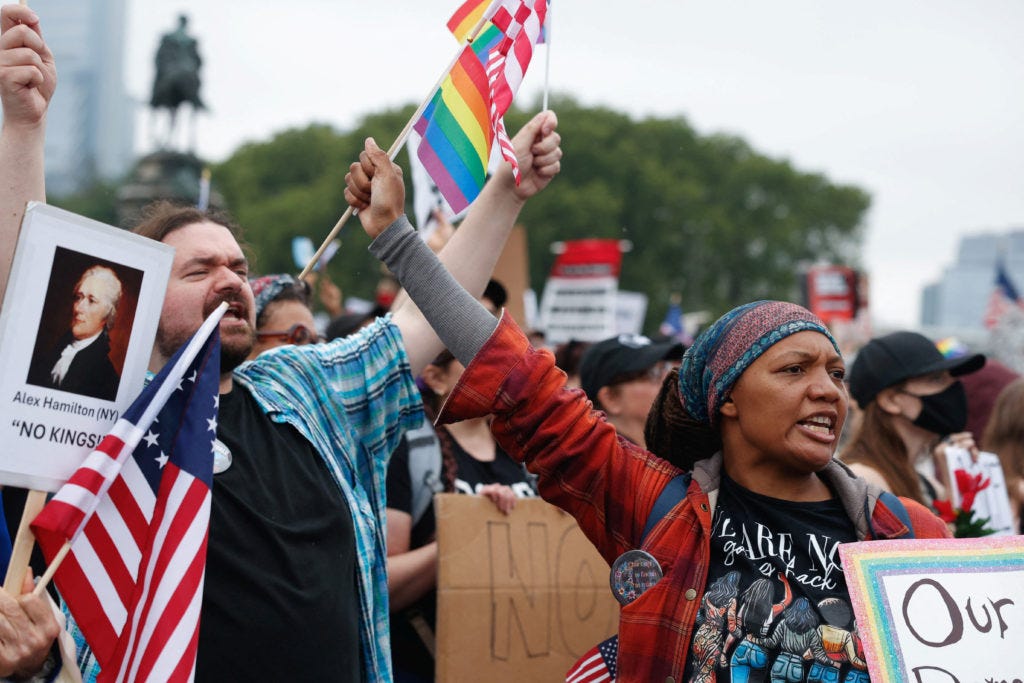
Second, and contrary to the smash-mouth tone of social media, protesters must continue to display the “better angels of our nature.” They should respond to propaganda by doing more than mirroring the hate and name-calling of their adversaries. An eye-for-an-eye only makes everyone similarly blind. Protesters must hold the moral high ground by repeatedly returning to the justice of their claims: all human beings should be treated with dignity and due process, democracy requires checks and balances, rule of law prohibits favors for friends and retribution against enemies.
These are compelling claims that should be disseminated as widely and creatively as possible. Protesters must show that they are better than their opponents, demanding something more than power alone. The diversity of voices, from all backgrounds and professions, helps to make this point. And a soberness of style, with respectful language for all listeners, remains essential if persuasion is the goal.
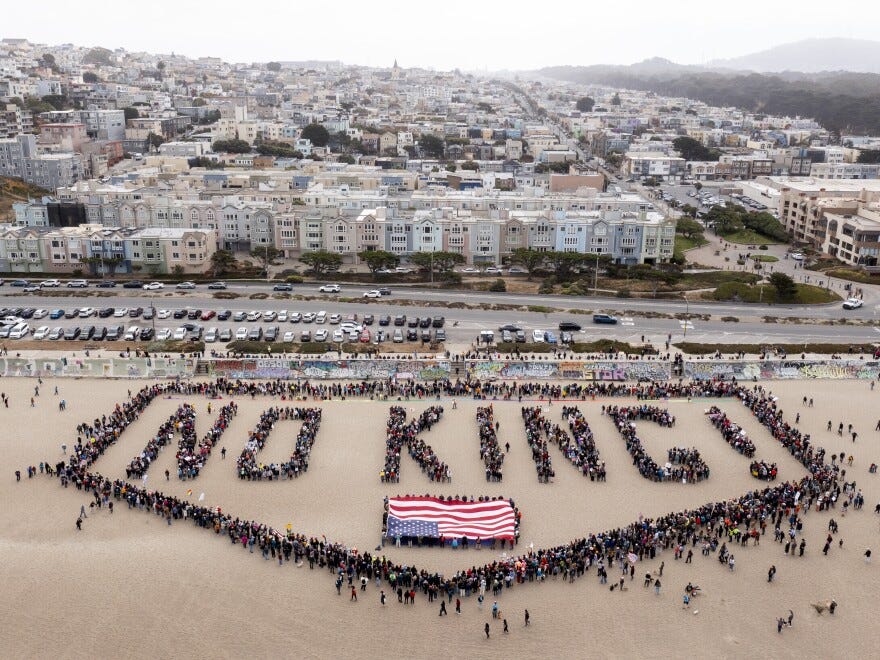
After this weekend, I have renewed faith that our democracy will endure because of the protesters, not because of the people in power right now. I expect more hate, lies, thievery, and law-breaking from the Trump administration in the coming days. I believe, however, that a large and diverse group of Americans is ready to push back and remind us all how we must be better. I saw not only protests this weekend, but a modeling of peaceful, passionate, creative, and persuasive politics in defense of democracy.
Leaders cannot ignore large groups of citizens forever. As in the past, leaders need support from the people to retain power. If protesters keep pushing for change, and they continue to grow their circle of supporters around the country, they will move government in their direction.
Change through peaceful protest is long and hard. It is at the core of American history from our founders (who were protesters), through abolitionists, anti-Fascists, and civil rights marchers (they were protesters too). It is what makes our democracy both difficult and great. We now have an opportunity to shine as engaged citizens, and the protests this weekend showed us that our time has truly come.
Silence and quiet grumbling are not enough. Find ways to speak up for democracy. That is how it is always saved in our beloved country.
Also see in:
German, Turkish, Chinese, Spanish
Jeremi Suri holds the Mack Brown Distinguished Chair for Leadership in Global Affairs at the University of Texas at Austin. He is a professor in the University’s Department of History and the LBJ School of Public Affairs. Professor Suri is the author and editor of eleven books on politics and foreign policy, most recently: Civil War By Other Means: America’s Long and Unfinished Fight for Democracy. His other books include: The Impossible Presidency: The Rise and Fall of America’s Highest Office; Liberty’s Surest Guardian: American Nation-Building from the Founders to Obama; Henry Kissinger and the American Century; and Power and Protest: Global Revolution and the Rise of Détente. His writings appear in the New York Times, Washington Post, Wall Street Journal, CNN.com, Atlantic, Newsweek, Time, Wired, Foreign Affairs, Foreign Policy, and other media. Professor Suri is a popular public lecturer and comments frequently on radio and television news. His writing and teaching have received numerous prizes, including the President’s Associates Teaching Excellence Award from the University of Texas and the Pro Bene Meritis Award for Contributions to the Liberal Arts. Professor Suri hosts a weekly podcast, “This is Democracy.”